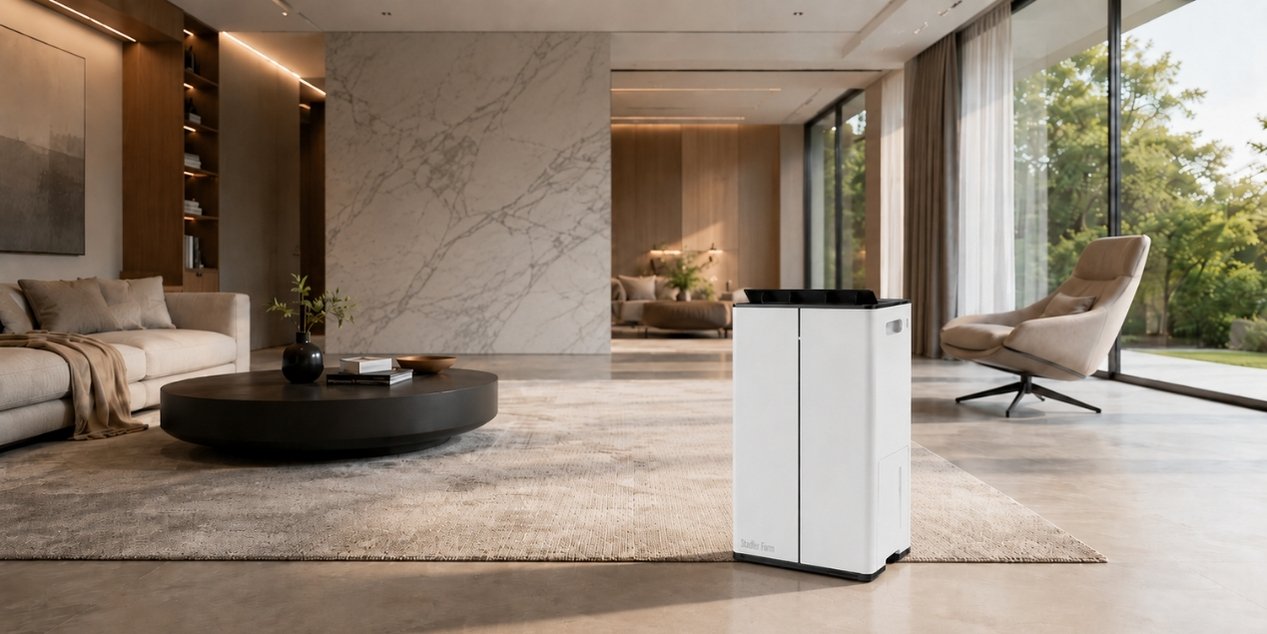
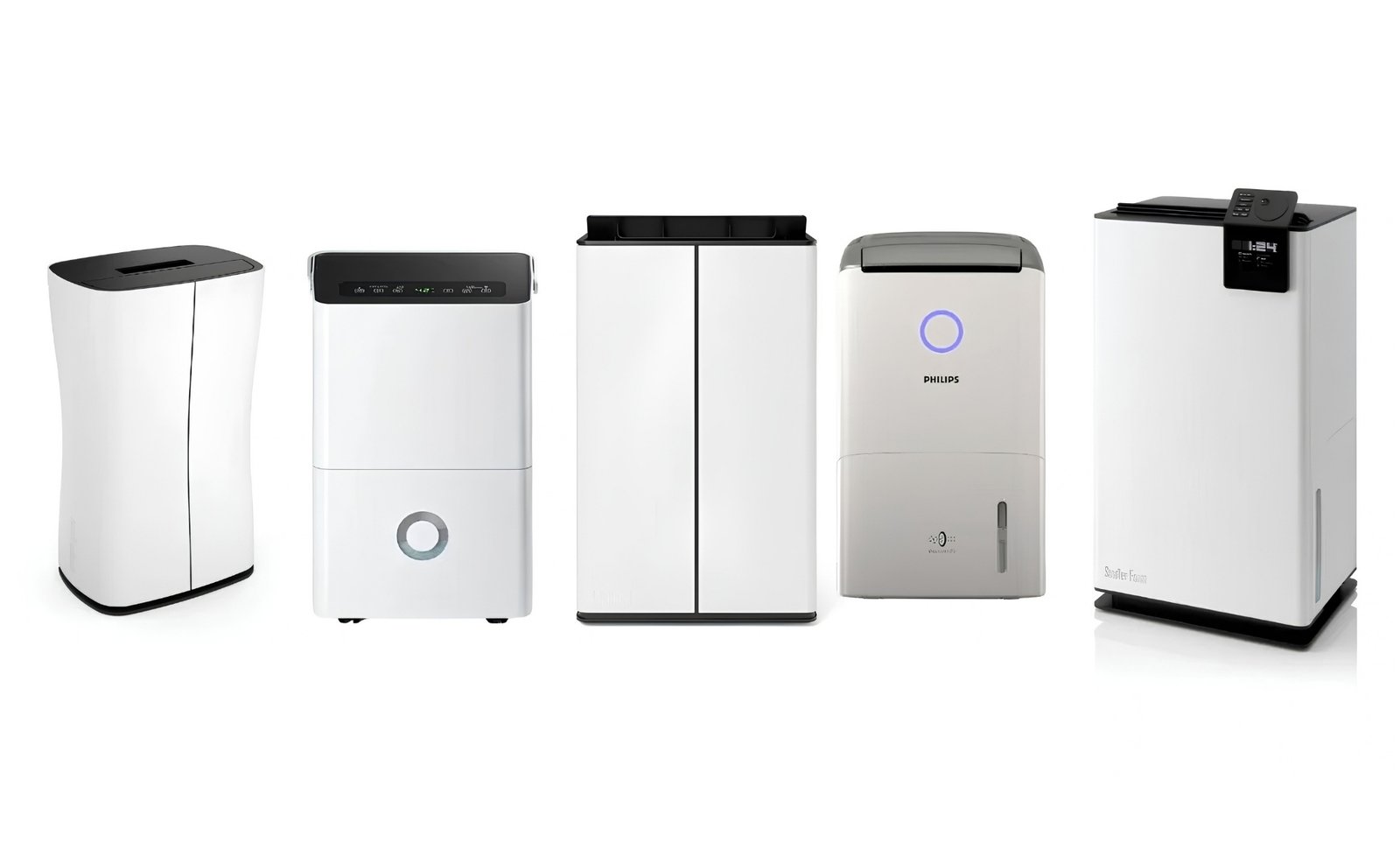
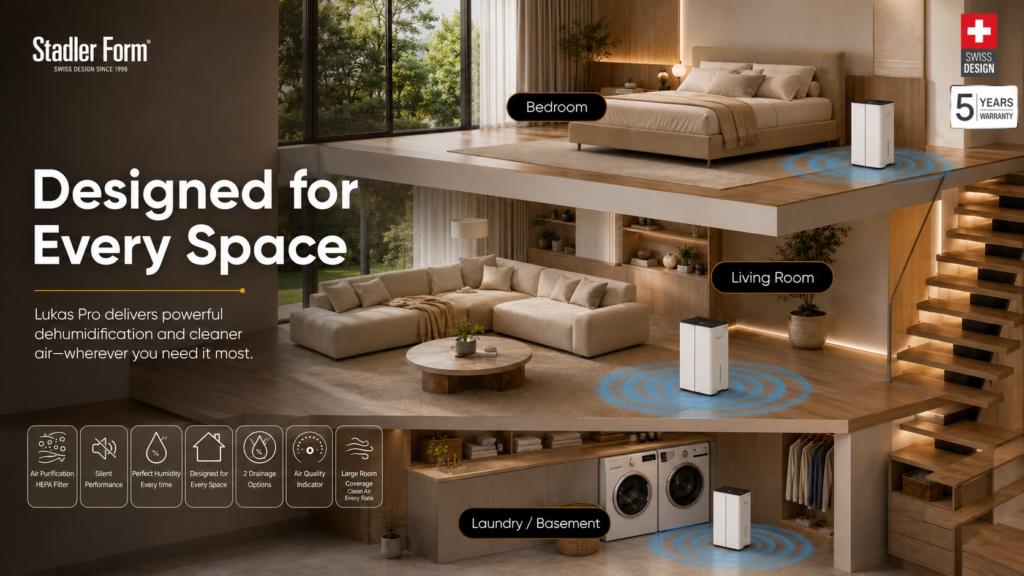
Quick answer: The right dehumidifier depends on your measured indoor humidity, the size and layout of the space, and the source of the moisture. Start with a humidity meter. Then compare the appliance’s litres-per-day rating, recommended room size, noise, water tank and drainage options. A 20 L/day model can suit a single room or open living area within its rated size; a 50 L/day model offers greater extraction for a larger open area or heavier moisture load. Neither rating guarantees that one portable unit will control humidity across every closed room in a home.
Where can you use a dehumidifier?
Dehumidifiers can be used in homes, apartments, villas, hotels, hotel rooms and suites, offices, yachts, holiday homes, home gyms, laundry rooms, basements, wardrobes, storerooms and showrooms. Choose the unit for the particular room or connected area where humidity is high. Hotels, villas and yachts may need different placement, drainage and maintenance arrangements; one portable appliance should not be assumed to cover an entire property.
In the UAE, an air-conditioned home can still have a damp wardrobe, condensation on windows or laundry that takes too long to dry. Outdoor humidity, ventilation, indoor activities and building issues can all play a part. Dehumidifiers can also be used in offices, hotel rooms and suites, hospitality spaces, yachts and other enclosed areas where excess humidity is measured. This guide explains what to check before buying, how to understand capacity claims and how to select a unit for each setting.
Do you need a dehumidifier?
A dehumidifier removes moisture from indoor air. It may be useful if you notice:
Condensation on windows or other cool surfaces
A persistent musty smell
Dampness in a wardrobe, storage room or bedroom
Clothes taking a long time to dry indoors
A humidity meter showing consistently elevated relative humidity
Start by measuring relative humidity in the room where you notice the problem. Check it at different times of day over several days; one reading does not describe every room or every condition. The US Environmental Protection Agency advises keeping indoor humidity below 60%, ideally between 30% and 50% where possible, to help control mould. In practice, the setting you choose should also account for comfort and the conditions in your home. Source: US EPA
If water is entering through a leak, damaged wall or other building fault, fix that source. A dehumidifier helps manage moisture in the air; it does not repair the cause of water intrusion
How to choose the right size dehumidifier
1. Measure the space you want to treat
Measure the floor area of the room or connected open area, rather than adding up the floor area of a whole apartment or villa. Check the manufacturer’s recommended room size, and consider whether doors will usually be closed. Air movement between separate rooms can be limited, so a unit rated for a 70 m² room should not automatically be described as a solution for a 70 m² apartment with several closed rooms.
Room height, outdoor air entering the space and the amount of moisture produced inside also affect the result. For a villa with humidity in several separate rooms, you may need more than one portable unit or advice on the ventilation and air-conditioning system.
2. Understand litres per day
Dehumidification capacity is usually stated in litres per day (L/day). This is the amount of water a unit can extract under specified test conditions, not a promise that its tank will collect that amount every day in your home. Extraction changes with temperature and relative humidity. Compare manufacturer ratings on a like-for-like basis and use the room-size guidance alongside them.
A higher L/day rating may be helpful for a larger open space or a greater moisture load, such as frequent indoor laundry drying. It is not a substitute for finding and fixing a leak.
3. Think about where the water will go
A removable tank works well if you can empty it regularly. For extended use, check whether the model supports continuous drainage and whether you have a suitable place for the hose to drain. Also check the tank-full automatic shutoff, tank capacity and ease of cleaning.
4. Consider everyday use
For a bedroom, compare noise levels at the speeds you expect to use, not just the quietest advertised setting. For a living area, consider the unit’s footprint and whether it has wheels or handles. A humidistat lets you select a target humidity; laundry mode can be useful when drying clothes indoors. Wi-Fi is convenient if you want to check or adjust the unit remotely, but it should come after sizing and drainage in your decision.
Which features matter most?
A capacity rating gets you to a shortlist. These features determine how practical the appliance will be in your home:
Feature
Why it matters
What to check
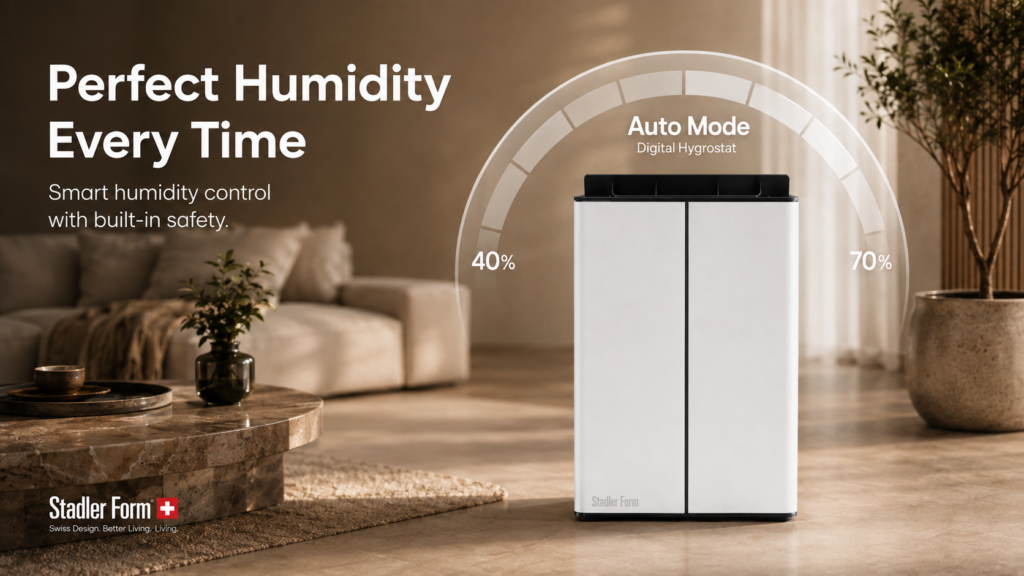
Adjustable humidistat
Lets the unit respond to a chosen humidity setting
Whether the display shows the current room reading as well as the target
Water tank and shutoff
Lets you use the unit without installing a drain
Tank size, ease of removal and whether the unit stops when full
Continuous drainage
Reduces manual emptying during long operation
Hose inclusion, hose length and a suitable drainage point
Noise and night mode
Matters in bedrooms and shared living spaces
Noise at the speed you plan to use, not only the lowest setting
Laundry mode
Helps with moisture released by drying clothes indoors
Where to place the unit and whether air can circulate around the laundry
Wheels and handles
Helps if you move the unit between rooms
Weight and how easily you can move it across your floors
Filter option
Adds particle filtration if this is important to you
Whether it is supplied with your exact SKU and what replacements cost
Power use
Affects running costs
Rated power and how your actual running time changes with conditions
Tank or continuous drainage?
A tank is flexible because the unit can be moved wherever you have a suitable power outlet. If the tank fills, an automatic shutoff prevents further collection until you empty and replace it. For an area that stays humid or for frequent laundry drying, a correctly routed drainage hose can make daily use easier. Follow the manufacturer’s setup instructions and check that water can flow to the drain as intended.
How much electricity does a dehumidifier use?
Check the model’s power rating in watts and estimate usage with this formula: watts ÷ 1,000 × hours of operation = kilowatt-hours (kWh). For example, a 500 W appliance drawing that power for eight hours would use approximately 4 kWh. This is only an illustration, not a running-cost claim for either model: actual draw and operating time change as the compressor cycles and the room approaches the selected humidity. Multiply estimated kWh by the tariff on your own electricity bill to get a rough cost.
Where should you place it?
Place the unit on a stable, level surface with the air inlet and outlet unobstructed. Follow the clearance distances in the manual and avoid putting it inside a closed wardrobe if the manual requires open airflow. When treating a single humid room, keep outside windows and doors closed where practical so the appliance is not continuously drying incoming outdoor air. Clean the tank and maintain any filters according to the manufacturer’s instructions.
How to use a dehumidifier in different places?
The best place for a dehumidifier is the specific area where you have measured excess humidity. Portable models can be useful in many settings, provided their capacity suits the connected space and they have clear airflow and a way to collect or drain water.
Around the home
Apartments: Bedrooms, living rooms, laundry areas and storage rooms where humidity stays high.
Villas and townhouses: Large open living areas, bedrooms or particular damp zones. One unit in an open area should not be assumed to control every separate room or floor.
Penthouses: Large connected rooms where the room-size rating, airflow and moisture load have been checked.
Bedrooms: Choose with operating noise and placement in mind, especially if the unit runs overnight.
Walk-in wardrobes and storage areas: Check whether air can circulate through the space and whether a leak or condensation is causing the dampness.
Laundry rooms: A laundry mode and continuous drainage may be useful when clothes are dried indoors frequently.
Bathrooms: Persistent moisture can signal inadequate extraction or a leak. Follow the manufacturer’s electrical safety and placement instructions; do not put a portable appliance in a wet area.
Basements and home gyms: Measure humidity and check for seepage, condensation or limited ventilation before deciding on capacity.
Hotels, suites and serviced apartments
Hotels and other hospitality properties can use dehumidifiers in guest rooms, suites, corridors with localised dampness, storage areas and laundry spaces. They can be particularly useful when extra moisture control is needed in one area without changing the entire building system. For guest rooms, consider operating noise, appearance, tank-emptying responsibilities and whether continuous drainage is possible. A portable 50 L/day model may suit a large open space within its rated room size; it will not dehumidify an entire hotel. Widespread humidity across rooms calls for an assessment of the air-conditioning and ventilation system.
Offices, meeting rooms and commercial interiors:
Offices and workplaces can use dehumidifiers where humidity readings stay high, such as meeting rooms, enclosed work areas or storage rooms. Check the actual connected floor area, operating noise during working hours, safe placement and who will empty the tank or maintain the drain. A large building with a recurring problem needs its HVAC and moisture source checked.
Yachts and marine interiors:
Yachts can also benefit from dehumidification in cabins, lounges or storage areas that develop damp smells or condensation. Check the indoor humidity first. Before choosing a unit, confirm that the appliance is suitable for the available power supply and operating conditions, has a safe position with clear airflow, and has a workable plan for collecting or draining water. The size of a yacht does not, by itself, determine the right L/day rating.
Other places to consider:
The same selection principles apply to holiday homes, guest accommodation, home gyms, laundry rooms, basements, storerooms, showrooms and enclosed workspaces. Measure humidity where the issue occurs, identify the moisture source and size the unit for the affected connected area.
These examples show where to investigate humidity. They do not mean every home, hotel or office needs a dehumidifier.
Compressor, desiccant or whole-house system?
Compressor dehumidifiers cool air to condense water vapour. They are a common choice for warm indoor spaces and are available in a wide range of capacities. Their performance changes with room temperature and humidity, so check the manufacturer’s operating conditions.
Desiccant dehumidifiers use a moisture-absorbing material. They may be worth considering for a cooler space where a compressor model is less effective. Compare power use and the actual room conditions before choosing a type.
Whole-house dehumidification is an option for persistent humidity across many rooms. It requires assessment and installation as part of the building’s ventilation or HVAC system. If a large villa has several damp rooms, a portable unit in one room may not address the wider cause.
Dehumidifier or dehumidifier with an air purifier?
Dehumidification and air filtration do different jobs. A dehumidifier removes moisture; an air purifier filters particlesfrom the air passing through it. If your only concern is humidity, compare dehumidification capacity first. If you also want particle filtration, check whether a compatible filter is included with the exact model sold to you or must be purchased separately. Check the filter replacement requirements as well.
A filter does not replace fixing a moisture problem or cleaning up existing mould. The US EPA’s mould guide explains why moisture control and cleanup both matter.
A practical way to shortlist a unit
These examples are starting points, not fixed rules. Check the reading and the actual connected room area before choosing a model.
Your situation
First question
What to prioritise
Humid bedroom
Is the humidity consistently high, and is there a leak?
Noise, target humidity, room size and easy tank access
Laundry drying in an apartment
How often do you dry clothes indoors?
Moisture-removal capacity, laundry mode and drainage
Large open living room
How many square metres share unrestricted airflow?
Rated room size, capacity, placement and airflow
Several damp rooms in a villa
Are all rooms affected, or only one?
Measure each room; investigate HVAC and moisture sources
Storage area or wardrobe
Is air circulating into the affected area?
Ventilation, leak checks and realistic unit placement
A smaller, correctly positioned unit can be more useful than a high-capacity unit placed in a distant room. Conversely, a unit that is too small for a very humid open area may run for long periods without reaching your chosen setting.
If you are comparing two Stadler Form options for a UAE home, use their manufacturer ratings as a starting point, then match the unit to the specific area you want to treat.
Feature
Lukas
Lukas Pro
Rated dehumidification
Up to 20 L/day
Up to 50 L/day
Manufacturer room-size rating
Up to 70 m²
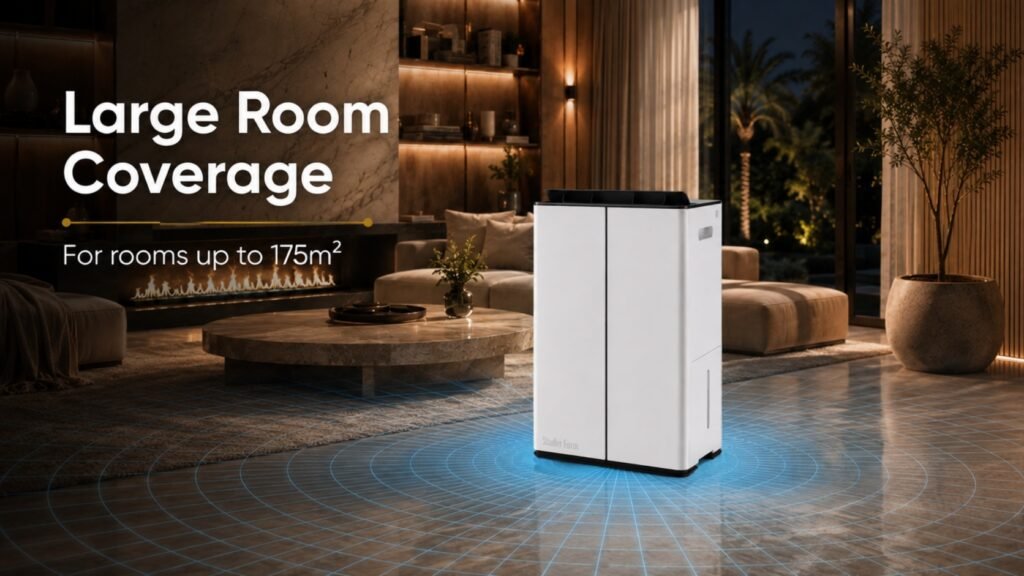
Up to 175 m²
Air purification
Compatible HEPA filter; check whether your chosen UAE package includes it
Lukas Pro also combines dehumidification with an air purifier rated at 327 m³/h CADR. CADR describes air cleaning performance, not moisture removal; its 50 L/day figure is the dehumidification rating. Both figures are manufacturer specifications and should be considered in their respective contexts. Source: Stadler Form
Common UAE home situations
A damp bedroom or wardrobe
Measure humidity where the problem occurs. Check for condensation, water ingress or a blocked ventilation path. Consider the room’s size, placement space and the noise of the unit at the speed you will actually use. If the wardrobe itself is closed, a dehumidifier elsewhere in the room may have limited effect inside it.
Laundry drying indoors
Wet clothes release moisture into the room. A laundry mode can help the unit run and circulate air while clothes dry, but extraction depends on the room conditions. Provide airflow around the clothes, monitor the humidity and plan how to empty the tank or drain the water.
A large open-plan living area
Compare the size of the connected space with the manufacturer’s room-size rating and consider the humidity reading and moisture load. Lukas Pro has a higher rated capacity than Lukas, but its 175 m² rating should not be interpreted as automatic coverage of an entire multi-room villa.
Humidity throughout a villa
If several rooms remain humid, check the air-conditioning, ventilation, fresh-air entry and possible water intrusion. You may need separate units for separate spaces or an assessment of the building systems. Start with measurements in each affected room before choosing equipment.
What if you already have mould or persistent dampness?
Dehumidification can help reduce excess moisture in the air, but it is only one part of the solution. Check for plumbing leaks, water entering around windows, condensation on cold surfaces and ventilation problems. Existing mould needs appropriate cleanup, and a recurring patch is a reason to investigate what is making that particular surface damp. The US EPA guide to mould and moisture explains the importance of addressing the moisture source.
If readings stay high after the unit has been running, note the room temperature, current humidity, target setting and whether the tank is collecting water. Check whether the doors or windows are open, the filter or air passages are blocked, and the hose or tank is fitted correctly. Those details are more useful for troubleshooting than the floor area alone.
Frequently asked questions
Does air conditioning remove the need for a dehumidifier in Dubai?
Air conditioning can remove some moisture while cooling, but it may not keep every room at the humidity you want. Measure the humidity in the affected room before deciding whether additional dehumidification would help.
What indoor humidity should I aim for?
As a practical reference, the US EPA advises keeping indoor relative humidity below 60%, ideally around 30–50% where possible, to help control mould. Use a humidity meter and choose a comfortable setting appropriate to your home rather than assuming one number suits every space. Source: US EPA
Is a 20 L/day dehumidifier enough for an apartment?
It depends on the area being treated, the number of separate rooms and the moisture load. A 20 L/day rating is an extraction specification, not an apartment-size guarantee. Compare the manufacturer’s recommended room size with the particular room or open area you want to treat.
Can one 50 L/day dehumidifier cover an entire villa?
Do not assume so. Even a high-capacity portable unit works best where air can circulate to and from it. Closed bedrooms, floors and distant areas may need separate treatment, and widespread dampness needs investigation.
Why is my room still humid while the dehumidifier is running?
Possible reasons include an undersized unit, open doors or windows admitting humid air, a full tank, restricted airflow, a low operating temperature, or a continuing source of moisture such as a leak. Check the humidity reading, appliance setup and moisture source before increasing capacity.
Should I run a dehumidifier all day?
It depends on the indoor humidity, moisture source, unit capacity and your chosen setting. A model with a humidistat can respond to the target rather than relying on a fixed number of operating hours. Monitor the humidity over several days, empty the tank when needed and investigate if the room never reaches the target.
Can I move one dehumidifier between rooms?
Yes, if the model is portable. Treat the affected room where possible, allow the unit to operate with unobstructed airflow, and measure the humidity in each room separately. Moving one appliance from room to room is different from controlling several closed rooms at once.
What does a 50 L/day rating actually mean?
It is a manufacturer’s rated extraction capacity under specified conditions. It does not mean that the machine will always collect 50 litres in a UAE home each day. The water collected depends on temperature, relative humidity and how much new moisture enters the space.
Can a dehumidifier prevent mould?
Reducing excess moisture can make conditions less favourable for mould growth. Existing mould still needs appropriate cleanup, and leaks or water intrusion must be repaired. Source: US EPA
The right choice starts with the room
Before buying a dehumidifier in the UAE, measure the humidity, identify the affected space and check for a continuing moisture source. Then compare capacity, rated room size, drainage, operating noise and the features you will actually use. For a room or connected area within its rating, Lukas offers up to 20 L/day; for a larger open area or heavier moisture load, Lukas Pro offers up to 50 L/day. The best choice is the one matched to your home’s real conditions, not simply the largest number on the box.
Protechshop
Newsletter
Signup our newsletter to get update information, news, insight or promotions.