
3 November 2026
Shoe cabinet, wardrobe and car smells in UAE heat: what causes them, and how to get rid of them.
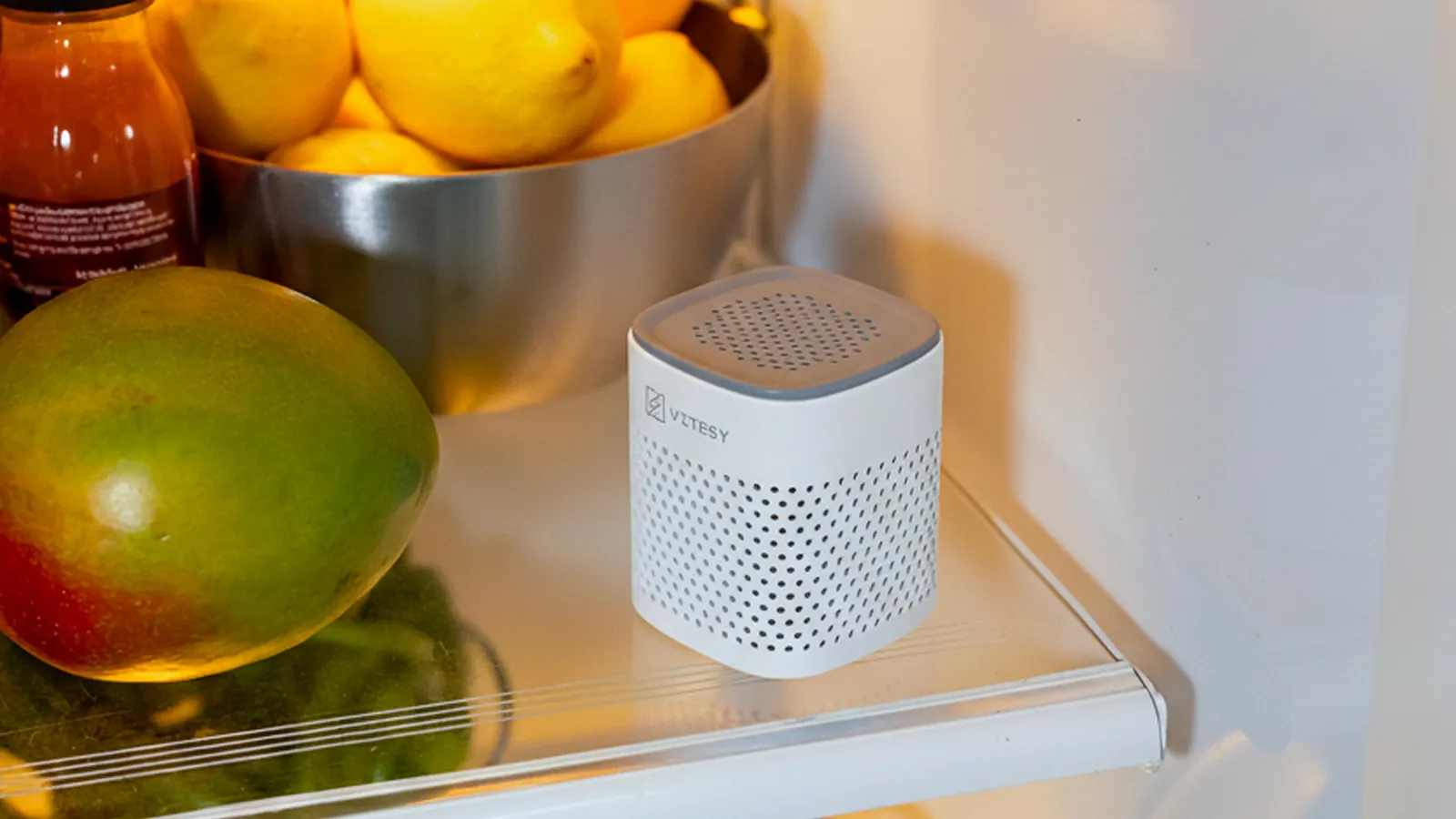
Short answer: shoe cabinet, wardrobe and car smells each have a cause you can fix. Shoes smell because skin bacteria break down sweat, wardrobes go musty when damp air lets mould grow, and car smells bake in when a closed cabin heats up. Dry and air the source first, keep humidity below 60%, then use something that breaks odours down rather than a fragrance that covers them. Keep aerosol fresheners and perfume sprays out of a hot car.
UAE homes and cars give odours ideal conditions: long, humid summers, cupboards and shoe racks that rarely see fresh air, and cars that sit in the sun all day. The Government of Dubai Media Office puts Dubai's average humidity at 59% across the year, peaking at around 65% in January and February, with summer highs averaging 41.8 °C. This guide explains what causes the three most common household smells and which fixes deal with the cause, including Vitesy Deo, a power-free odour eliminator from the Italian company Vitesy.
Why do air fresheners not fix the smell?
Because most of them are not designed to. The New York State Department of Health says scented products "only mask or cover up other odors by adding more chemicals into the indoor air", and that they do not get to the source. The US EPA lists air fresheners among household sources of volatile organic compounds (VOCs), and a peer-reviewed study of 37 fragranced products, including air fresheners, found 156 different VOCs, fewer than 3% of them disclosed on the label. The rule from the same health department is simple: find the source and remove it, or contain it.
| Approach | What happens to the odour | Upkeep | Suited to |
|---|---|---|---|
| Spray or plug-in air freshener | Covered with fragrance; the source stays | Refills | Nothing long term |
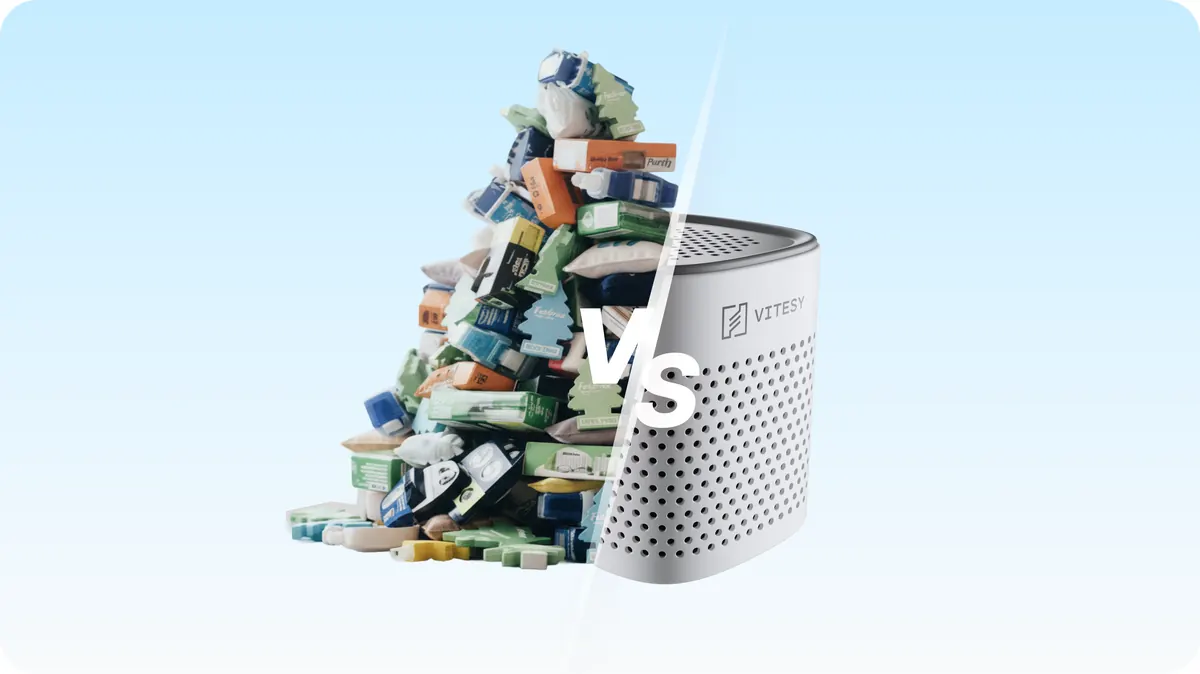
| Activated charcoal or baking soda | Adsorbed until the material is full | Replace when saturated | Small spaces, short term |
| Catalytic odour eliminator (Vitesy Deo) | Broken down into CO₂ and water, Vitesy says | No refills; wipe clean. Vitesy estimates 10 years from accelerated lab tests | Shoe cabinets, wardrobes, cupboards, fridges |
| Ozone generator | Partly oxidised; adds ozone | Varies | Not recommended: US EPA and NY health department advise against |
Activated carbon works, within limits: the EPA's guide to home air cleaners says it can be effective if there is a large amount of material, but that gas-phase filters overload quickly and need replacing often. That is the catch with most shoe rack and closet odour absorbers: they work until they are full. For how catalytic, photocatalytic and ozone odour eliminators differ, and which are safe, see HawaQ's guide to PCO, catalytic and ozone purifiers.
Smelly shoes and a shoe cabinet that smells bad: what to do
Shoe odour starts on the feet. Research published in the Canadian Journal of Microbiology traced foot odour to isovaleric acid, produced when the skin bacterium Staphylococcus epidermidis breaks down leucine in sweat. Hot weather means more sweat, so UAE summers make it worse, and a closed shoe cabinet keeps that smell in. The NHS advice is practical:
- Let shoes dry out completely before you wear them again, and do not wear the same pair two days in a row.
- Change socks daily and wash and dry feet thoroughly, including between the toes.
- Store shoes in a ventilated rack or cabinet, not in a closed box while they are still damp.
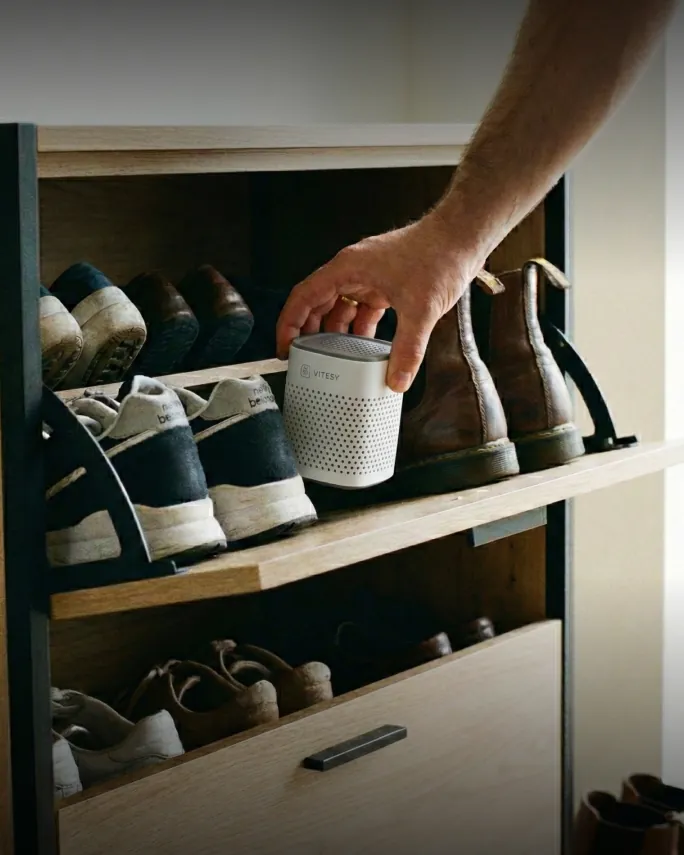
- Put an odour eliminator inside the shoe cabinet so the smell does not spread to the hallway. Vitesy's user guide rates one Deo for 1 to 2 m³, and its buyer test guide uses one per 0.5 m³ for strong odours, so one suits a small cabinet and a tall or very smelly one may need two. Leave about 5 cm of free space around it.
Why does my wardrobe smell musty or damp?
A musty smell is a moisture warning. The New York State Department of Health says to check for moisture problems that could lead to mould, and the US EPA's mould guide is blunt: "The key to mold control is moisture control". The EPA advises keeping indoor humidity below 60%, ideally between 30% and 50%. Dubai's annual average sits right on that line, and wardrobes against outside walls, near AC ducts or in rooms without windows can stay damp for days.
- Do not hang clothes that are even slightly damp, including gym kit and towels.
- Leave a gap between the wardrobe and the wall, and open the doors for an hour a day.
- Measure: a cheap hygrometer tells you whether the room is above 60%.
- If it is, dehumidify the room. Stadler Form's guide to dehumidifiers for rooms without windows covers walk-in wardrobes and internal bathrooms.
- If you can see mould on walls or ceilings, deal with that first: HawaQ explains why mould keeps coming back and when to call a professional.
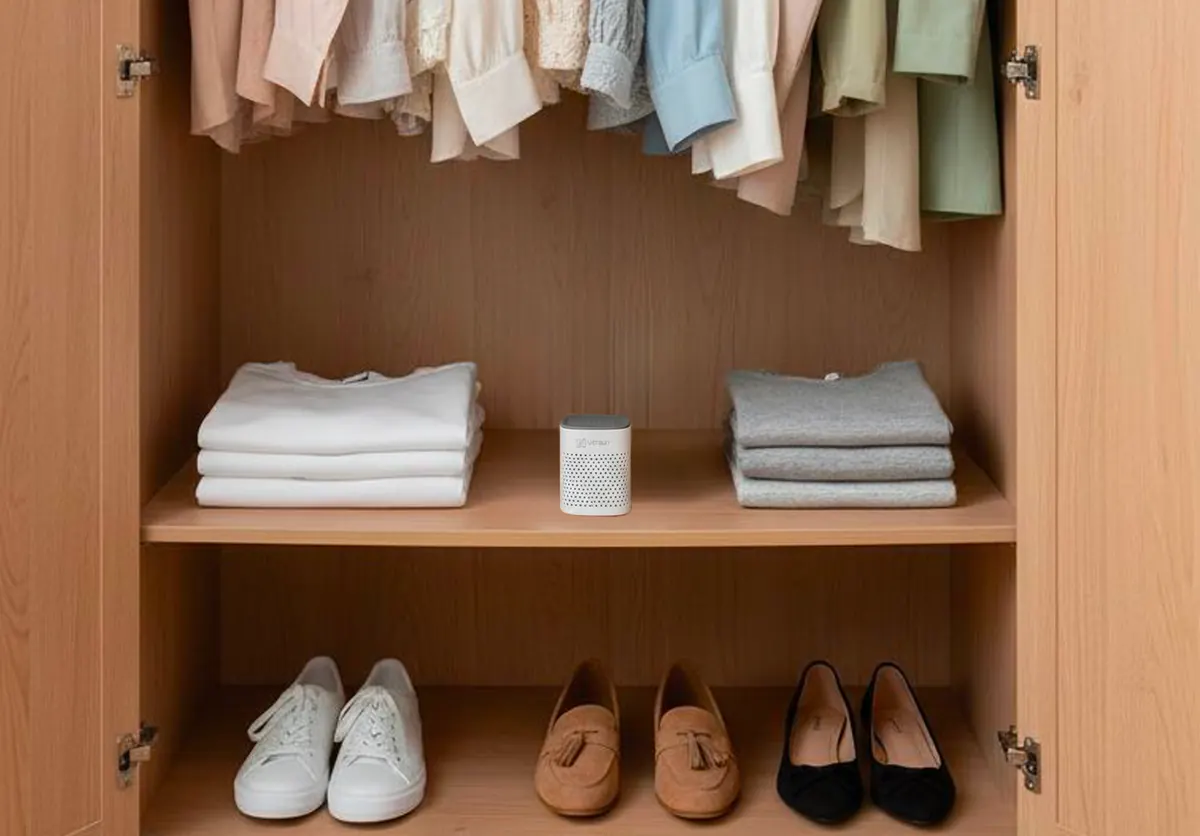
- Once the room is dry, an odour eliminator on a shelf keeps the wardrobe fresh without adding perfume to your clothes.
Order matters with a closet odour absorber or eliminator. Vitesy gives Deo an operating range of 40% to 80% relative humidity and says condensation or high humidity can temporarily reduce its efficiency, so in a damp UAE wardrobe, fix the humidity first and add the odour eliminator second.
How to remove bad smells from a car in UAE heat
A closed car is an oven. In a peer-reviewed study at UAE University in Al Ain, ten cars parked in the shade on a May day averaged a cabin temperature of 41.8 °C against 37.4 °C outside, and one car under a tree reached 50 °C. In a similar desert-climate study in Arizona, cars parked in the sun averaged 46 °C inside within an hour, with dashboards at 69 °C. Heat releases more smell from food spills, sweat and smoke, and from the car's own materials.
- Find the source. Check under the seats and in the boot for food, wet umbrellas, gym bags and spilt drinks, and vacuum the mats.
- Replace the cabin air filter on the schedule in your car's manual; a clogged filter can make the AC smell musty.
- Air the car before you drive: open the windows for a minute to let the hottest air out.
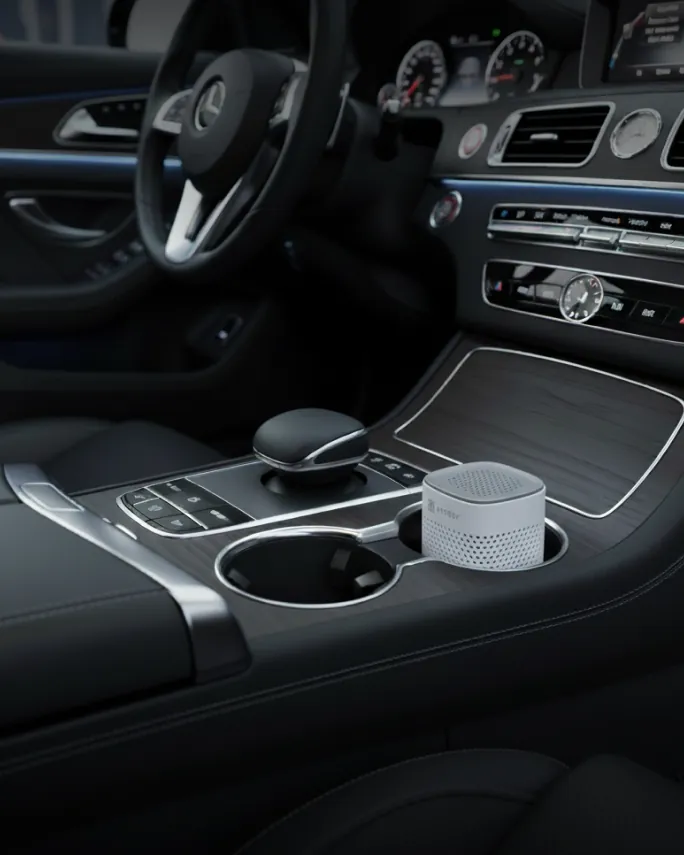
- Use a remover, not a perfume. Vitesy lists cars among the places for Deo, and it fits a cup holder, but Vitesy publishes no operating-temperature range for it, so we cannot tell you how it copes with a car parked in UAE summer sun. A shoe cabinet or wardrobe at home is the surer use.
- Keep pressurised cans out of the car. Abu Dhabi Police has warned drivers not to leave compressed perfume bottles, sanitiser sprays, gas canisters, chargers, phone batteries or lighters in a hot vehicle; aerosol cans carry the warning "May burst if heated".
Vitesy Deo: an odour eliminator for closed spaces
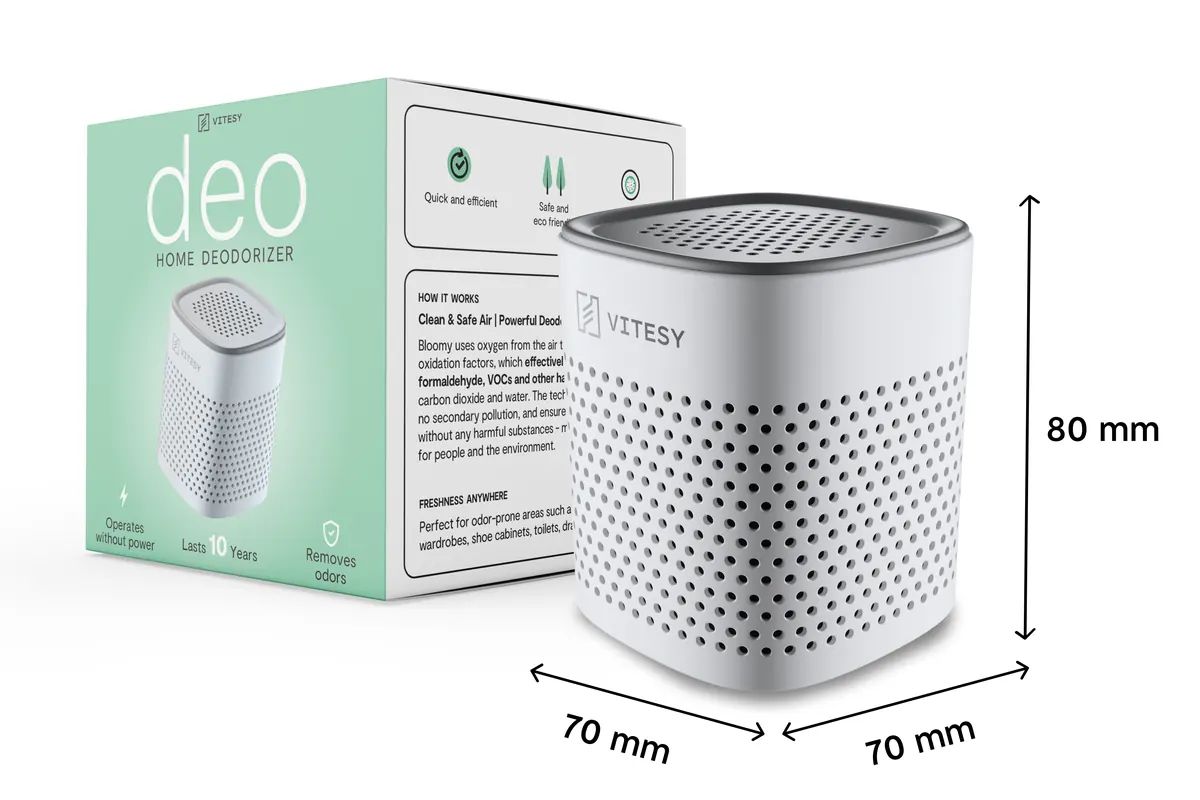
Vitesy Deo is designed by the Italian company Vitesy and made in China. It is a small white unit, 70 × 70 × 80 mm and about 150 to 165 g, with a ceramic catalytic filter in an aluminium housing. Vitesy says the catalyst breaks odour molecules down into carbon dioxide and water at room temperature, so it needs no power, batteries, refills or fragrance. Vitesy estimates a 10-year life from accelerated laboratory tests, counted from the day it comes out of the packaging.
In Vitesy's test report (Guangdong Detection Center of Microbiology, September 2025, standard QB/T 2761-2006), trimethylamine, the fishy smell, fell from 2.19 mg/m³ to below the 0.01 mg/m³ detection limit within 2 hours in a sealed 60-litre box, which Vitesy states as more than 99.5%. Methyl mercaptan, a rotten-cabbage sulphur smell, fell from 2.26 mg/m³ to below 0.01 mg/m³ in the same kind of test. Formaldehyde in a sealed 1.5 m³ chamber fell from 0.989 to 0.0322 mg/m³ in 24 hours (96.7%).
Those are sealed-box lab results, not a promise for your home. Vitesy's FAQ says that in most cases a reduction in odours can be noticed within 72 hours, and its own buyer test guide says Deo "may significantly reduce the intensity of odors without necessarily eliminating them completely". Strong, constant sources such as damp trainers or a wet bin still need drying and cleaning.
| Where | Typical smell | How many Deo |
|---|---|---|
| Shoe cabinet | Sweat, damp trainers | 1 for a small cabinet; 2 for a tall or very smelly one |
| Wardrobe | Musty, stale fabric, wood | 1 per section, once humidity is under control |
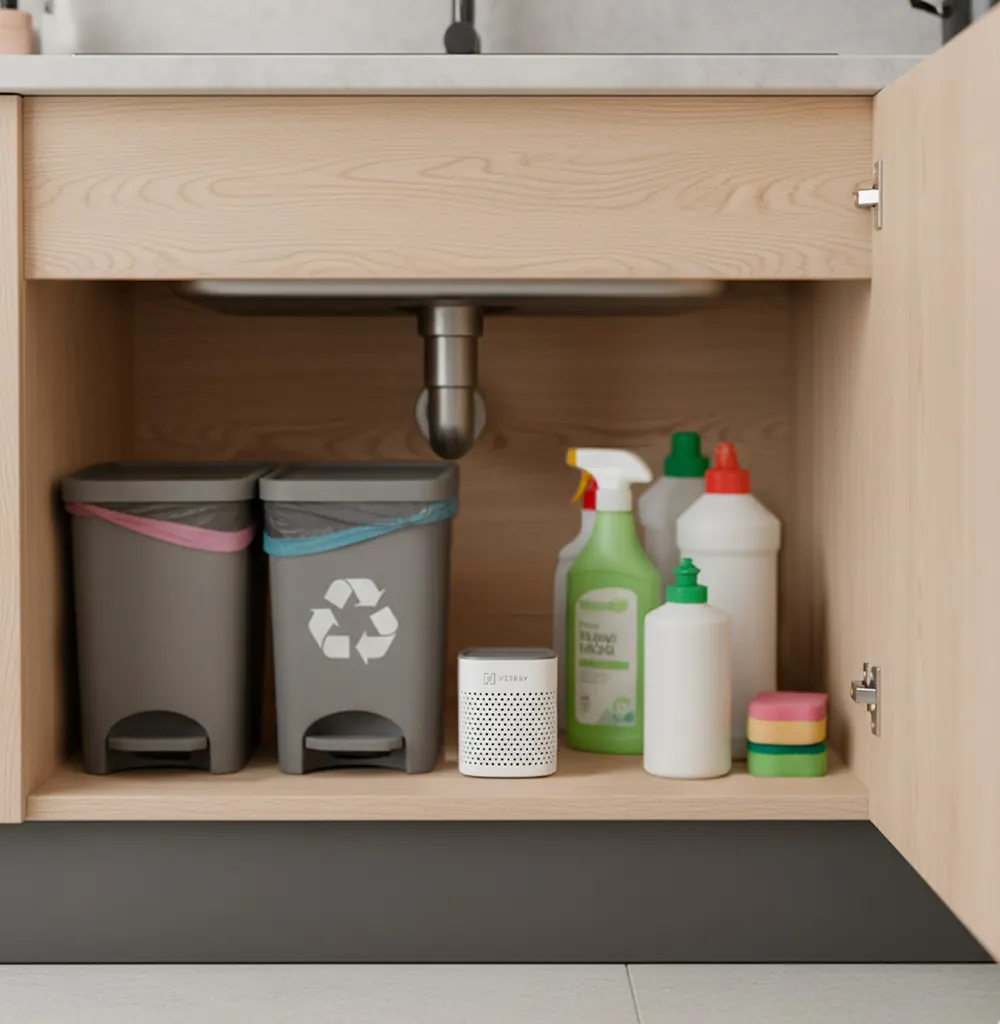
| Kitchen cupboard or under the sink | Onion, garlic, bins, drains | 1 per cupboard |
| Fridge | Fish, cheese, leftovers | 1 per fridge |
| Car | Food, smoke, sweat, damp | Vitesy lists cars; it publishes no operating-temperature range |
Vitesy's sizing figures range from one unit per 1 to 2 m³ (user guide) to one per 0.5 m³ for strong odours (buyer test guide), so use more units in bigger or smellier spaces. Care is minimal: wipe the outside with a slightly damp cloth, never rinse it or put it under water, and try not to drop it, because Vitesy says the filter inside a dropped unit may break.
For the fridge, Vitesy also makes Shelfy, a rechargeable fridge air purifier designed to keep fruit and vegetables fresh for longer. If your fridge smells after a power cut, after standing switched off or after a move, read our guide to fridge smell after a power cut, defrosting or moving; for everyday fridge odours, PRO TECHnology's guide to getting rid of fridge smell has the full cleaning method.
PRO TECHnology in Dubai expects the first Vitesy shipment by 20 November 2026; you can reserve Shelfy or Deo now on the PRO TECHnology Vitesy page, with no payment online.
Frequently asked questions
Why does my shoe cabinet smell bad?
Because shoes go into it while they are still damp with sweat, and skin bacteria break that sweat down into smelly acids. A closed cabinet traps the smell. Dry shoes fully before they go in, rotate pairs, keep the cabinet ventilated, and add an odour eliminator such as Vitesy Deo inside it.
How do I get rid of shoe smell?
Let shoes dry fully between wears, rotate pairs so you never wear the same ones two days running, change socks daily, and keep an odour eliminator in the shoe cabinet. The smell comes from skin bacteria breaking down sweat, so drying is the most effective step.
Why does my wardrobe smell musty or damp?
Because the air in the wardrobe is damp enough for mould and mildew. The US EPA advises keeping indoor humidity below 60%, ideally 30% to 50%. Dry the room, never hang damp clothes, and use an odour eliminator once the moisture is under control.
Do shoe rack and closet odour absorbers work?
Yes, for a while. Activated charcoal adsorbs odours, and the US EPA says it can be effective when there is enough of it, but it fills up and needs replacing often. A catalytic eliminator such as Vitesy Deo breaks odours down instead, and Vitesy estimates its life at 10 years from accelerated lab tests.
Does Vitesy Deo work in a humid wardrobe?
Vitesy gives Deo an operating range of 40% to 80% relative humidity, and says condensation or high humidity can temporarily reduce its efficiency. In a damp UAE wardrobe, bring the humidity down first, then add Deo.
How long does Vitesy Deo take to work?
Vitesy's FAQ says that in most cases a reduction in odours can be noticed within 72 hours, depending on how strong the odour is. Its lab results come from a sealed 60-litre box, and Vitesy's own buyer test guide says Deo may reduce odours significantly without necessarily eliminating them completely.
How long does Vitesy Deo last?
Vitesy estimates 10 years, counted from the day it is taken out of the packaging, based on accelerated laboratory tests. It needs no refills, power or maintenance beyond a wipe with a slightly damp cloth; never rinse it.
How do I get rid of a bad smell in my car in the UAE?
Remove the source first: food, spills, wet gym kit and a clogged cabin air filter. Then use something that removes odour rather than adding perfume, and keep aerosols out of the car: Abu Dhabi Police warns against leaving perfume sprays and other pressurised cans in a hot car. Vitesy lists cars among Deo's uses but publishes no operating-temperature range for it.
Is it safe to leave an air freshener in a hot car?
Not if it is an aerosol or a compressed perfume bottle. Abu Dhabi Police lists these among items not to leave in a car in summer, and aerosol cans carry the warning that they may burst if heated. Dashboards in a sun-parked car averaged 69 °C within an hour in a desert-climate study.
Where can I buy Vitesy Deo in the UAE?
From PRO TECHnology in Dubai, which distributes Vitesy; EVO does not sell it yet. PRO TECHnology expects the first Vitesy shipment by 20 November 2026, and you can reserve Shelfy or Deo now on the PRO TECHnology Vitesy page, with no payment online.
Sources
- New York State Department of Health, Odors and health
- US EPA, Volatile organic compounds' impact on indoor air quality and Guide to air cleaners in the home
- Steinemann, Air Quality, Atmosphere & Health 2015, volatile emissions from common consumer products
- Ara et al., Canadian Journal of Microbiology 2006, foot odour and isovaleric acid
- NHS, Smelly feet
- US EPA, A brief guide to mold, moisture and your home
- Government of Dubai Media Office, Geographic location and climate
- Alkaabi and Raza, Frontiers in Built Environment 2022, car cabin temperatures at UAE University
- Taylor & Francis, 2018, hot cars in a desert climate
- Abu Dhabi Police, hazardous items to keep out of vehicles in summer
- Vitesy, Vitesy Deo, the Vitesy Deo test report and the Vitesy Deo user guide (manufacturer's own results)
- Vitesy FAQ: how quickly Deo works, how long the technology lasts and how to clean it
- Vitesy Deo technical sheet and buyer test guide (27 May 2026), from Vitesy's distributor kit; not published online
EVO is PRO TECHnology's online store; PRO TECHnology distributes Vitesy, which EVO does not sell yet. PRO TECHnology also distributes Stadler Form in the UAE, and HawaQ is a group company. This guide is general information, not medical advice.